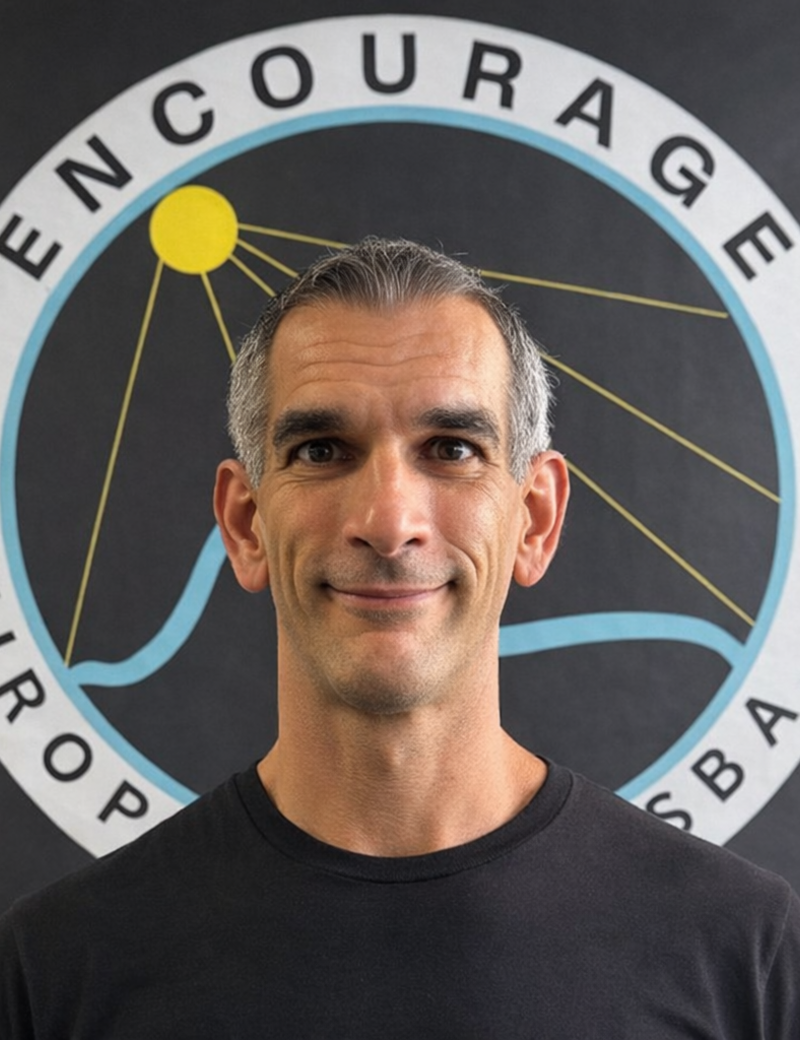
Jeremiah Kloss
DC, BSc-Kin, AA-ExPhys
Chiropractic
Jeremiah Kloss, DC is a Doctor of Chiropractic, Kinesiologist, Exercise Physiologist, and U.S. Marine veteran. His clinical approach is rooted in kinesiology and movement science, with a focus on helping patients build resilience, efficiency, and confidence in how they move through life. Dr. Kloss integrates multiple tools in care, including chiropractic adjustments, movement-based therapy, and strategically applied exercise, always tailored to the individual in front of him. His goal is not just symptom relief, but helping patients better understand their bodies and make meaningful progress toward their long-term goals. He believes that sustainable change comes from intentional action—small, consistent steps taken daily in the direction of better movement, strength, and self-trust. Dr. Kloss is passionate about guiding patients toward a clearer, more empowered way of viewing exercise and movement. Outside the clinic, Dr. Kloss is married to Brittney Ruffier-Kloss. Together they share their home with their dogs Piper, Hannah, and their newest addition, Kailani.
My Journey
I didn’t build Encourage Chiropractic to run a high-volume clinic.
I built it because I’ve lived inside a body that had to adapt.
Like many people, I’ve dealt with injury, asymmetry, fatigue, compensation, and the quiet frustration of knowing something isn’t working the way it should.
What stood out to me early on was this:
Most care addresses pain.
Very little care explains adaptation.
Over time, I became less interested in quick relief and more interested in patterns.
Why does the left side load differently?
Why does tension return?
Why does strength fade under stress?
Why does pain migrate instead of resolve?
That curiosity shaped how I practice.
From Force to Function
My perspective wasn’t shaped by education alone.
It was shaped by physically demanding work, structured training environments, formal study in movement science — and seasons of life that required resilience, humility, and recalibration.
I’ve learned that small actions matter.
That presence matters.
That people are often carrying more than we realize.
Structure matters.
Load matters.
Discipline matters.
But so do patience, clarity, and timing.
Brute force doesn’t fix compensation.
And rest alone doesn’t build resilience.
Over time, I became more interested in how the nervous system learns.
How motor patterns form.
How strength and mobility interact.
How posture reflects history.
Adjustment became part of something bigger — not the whole solution.
Encouragement, to me, isn’t loud.
It’s steady.
It’s consistent.
It’s showing up with intention.
Why Encourage Chiropractic Exists
Encourage means to give courage. Courage is proceeding in the presence of fear.
In this clinic, encouragement looks like:
1) We start with context, not guesses.
We take your history seriously — not just “where it hurts,” but when it started, what has helped, what has failed, what your training/work/sleep/stress look like, and what your body has been forced to adapt to.
2) We translate your symptoms into a pattern you can understand.
You shouldn’t leave confused. We connect the dots between what you feel and what your body is doing — stiffness, asymmetry, weakness, instability, compensation, flare-ups, recurring “same spot” pain. You get a clear working explanation, not a vague diagnosis.
3) We assess movement and capacity, not just joints.
Encouragement is telling the truth about what your body can and can’t currently tolerate — then building from there. We look at how you load, breathe, brace, balance, hinge, squat, reach, rotate, and stabilize… because the way you move is usually the reason the pain keeps coming back.
4) We choose the right tool for the right moment.
Sometimes the priority is mobility.
Sometimes it’s strength.
Sometimes it’s control and coordination.
Sometimes it’s recovery.
The plan adjusts based on what’s least “primed” that day — because your nervous system is not a machine, and your readiness changes.
5) We use hands-on care as a bridge, not a destination.
Adjustments can help restore motion, reduce protective tension, and create a window where movement is easier. But encouragement means we don’t stop at relief — we use that window to teach your body something new.
6) We scale load so you succeed before you fail.
This is huge. Encouragement is not throwing you into the deep end. It’s building tolerance with intelligent progressions so you get wins you can trust. We reduce the “fear tax” by proving what’s safe — step by step.
7) We train confidence under pressure.
Not hype-confidence. Evidence-based confidence.
The kind you earn when your body demonstrates:
“Yeah… I can do that again.”
We build stability, control, and repeatability — especially for people who have been burned by flare-ups in the past.
8) We teach you self-checks and decision-making.
Encouragement is helping you become less dependent. You learn how to check yourself, identify what’s limiting you today (mobility vs strength vs conditioning vs control), and choose the right next step instead of guessing or avoiding movement entirely.
9) We address the real-world stuff: training, work, and life.
If you train hard, sit at a desk, carry kids, drive long hours, surf, lift, hike — that matters. We don’t pretend your lifestyle is separate from your symptoms. Encouragement means we adapt your plan to reality, not perfection.
10) We’re honest about risk — and we teach you how to manage it.
Courage isn’t “no risk.” It’s knowing what risk is reasonable and what isn’t. We don’t promise magic. We reduce uncertainty by building clear next steps, measurable progress, and practical boundaries.
11) We make the plan simple enough to follow.
You’re not leaving with 14 rehab exercises you’ll never do. You get a small number of high-value actions — the kind that actually fit into your week.
12) We measure progress by capability, not just pain.
Pain changes. Stress changes. Sleep changes.
But capability is a more reliable scoreboard:
range, control, strength, tolerance, confidence, and consistency.
Over time, that builds something stronger than relief.
It builds capability, autonomy, and resiliency.
If You’re Ready to Understand What’s Happening in Your Body — Let’s Start There.
If something feels off, stiff, unstable, or uncertain — that’s not weakness.
It’s feedback.
The first step isn’t aggressive treatment.
It’s understanding.
Whether you’re returning to training, managing recurring pain, or simply trying to move through life with more confidence, the process starts with clarity.
Book your evaluation when you’re ready.
If you have questions first, reach out.
